Barcelona's hydraulic tiles
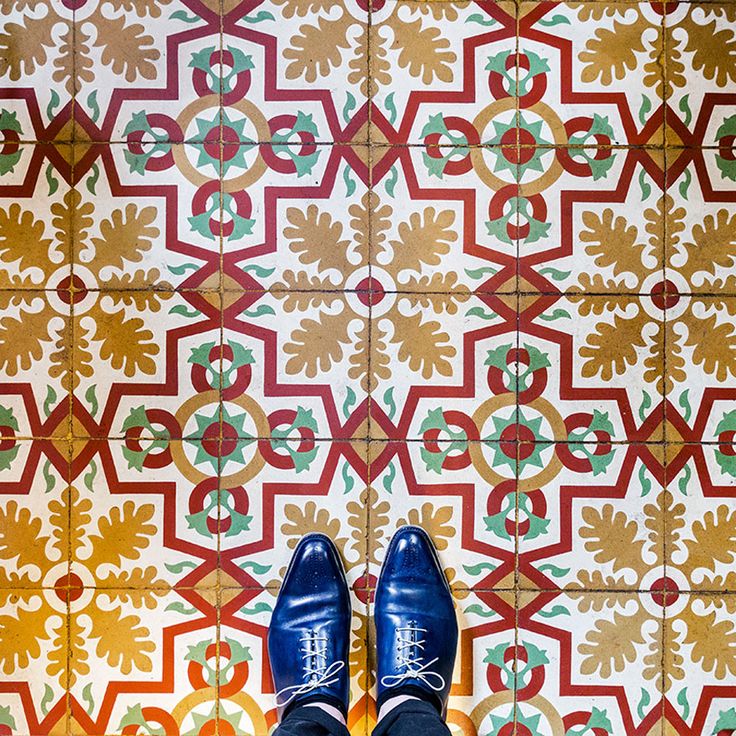 The uniqueness and history of Catalan hydraulic tiles (Spanish: mosaico hidráulico) are inseparably linked to Barcelona's architectural heritage, the technical innovations of the 19th century, and the contemporary movement to preserve urban art.
 The technology for manufacturing hydraulic tiles appeared in Europe in the mid-19th century. Unlike traditional ceramics, these tiles do not require firing: they are made from cement, sand, marble dust, and natural pigments, which are compressed under high pressure.
The golden age of this material in Catalonia coincided with the era of Modernisme. Prominent architects of the period, such as Antoni Gaudí, Lluís Domènech i Montaner, and other Catalan master builders, designed unique floor patterns, believing that the flooring should harmonize with facades and furniture to achieve an aesthetic unity throughout the building. By the mid-20th century, the popularity of these tiles declined due to the emergence of lighter and cheaper materials, such as terrazzo and porcelain stoneware.
What makes them unique
According to various sources, the value of Catalan tiles is determined by several factors:
- Handcrafted production: Each tile is made individually. Using special metal moulds (matrices), artisans create intricate geometric or floral patterns that are impossible to reproduce exactly by industrial means.
- Democratization of art: Hydraulic tiles made it possible to bring the refined decorative language of Modernisme into the homes of ordinary people who could not afford costly architectural commissions.
- Incredible diversity: It is estimated that thousands of different designs exist. Even today, collectors discover previously unknown patterns beneath layers of modern cement or laminate flooring.
- Durability and aesthetics: The use of natural pigments and marble provides deep, rich colours and exceptional wear resistance.
A contemporary revival: the "tile hunters"
In recent years, a phenomenon of "tile hunters" has emerged in Barcelona, with figures such as Joel Canovas (@tilehunter) and Marc Ocaña. They rescue historic floor fragments quite literally from construction debris during renovations of old apartments.
Today, these tiles have evolved from an ordinary building material into a symbol of urban memory and an object of collecting. Specialized venues are opening in Barcelona, such as the "Tile Museum" (El Temple de la Rajola), dedicated to the study, cataloguing, and restoration of this heritage. Contemporary designers are also returning to this material, using it in interiors to imbue spaces with character and uniqueness.
In our projects we treat the historical heritage with great care and, whenever possible, restore such floors with particular attention to detail